The Effect of Muscles in Learning Behavior
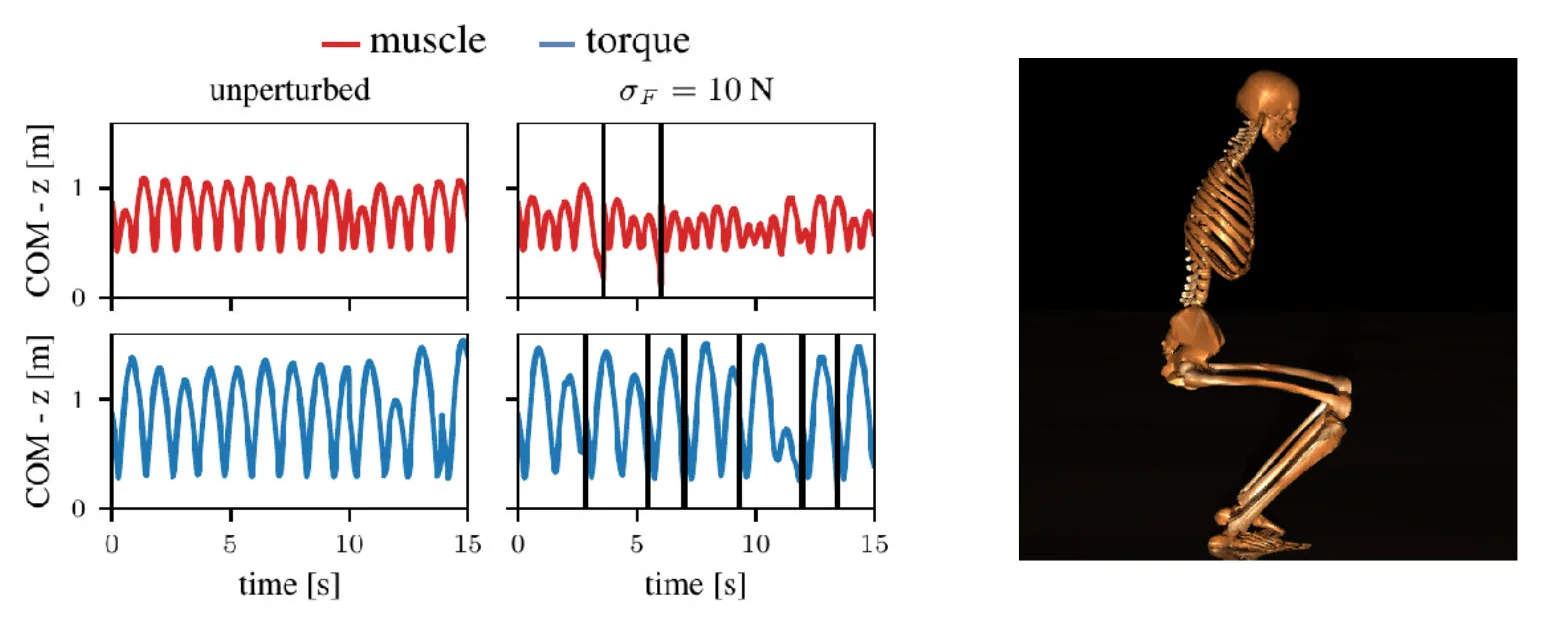
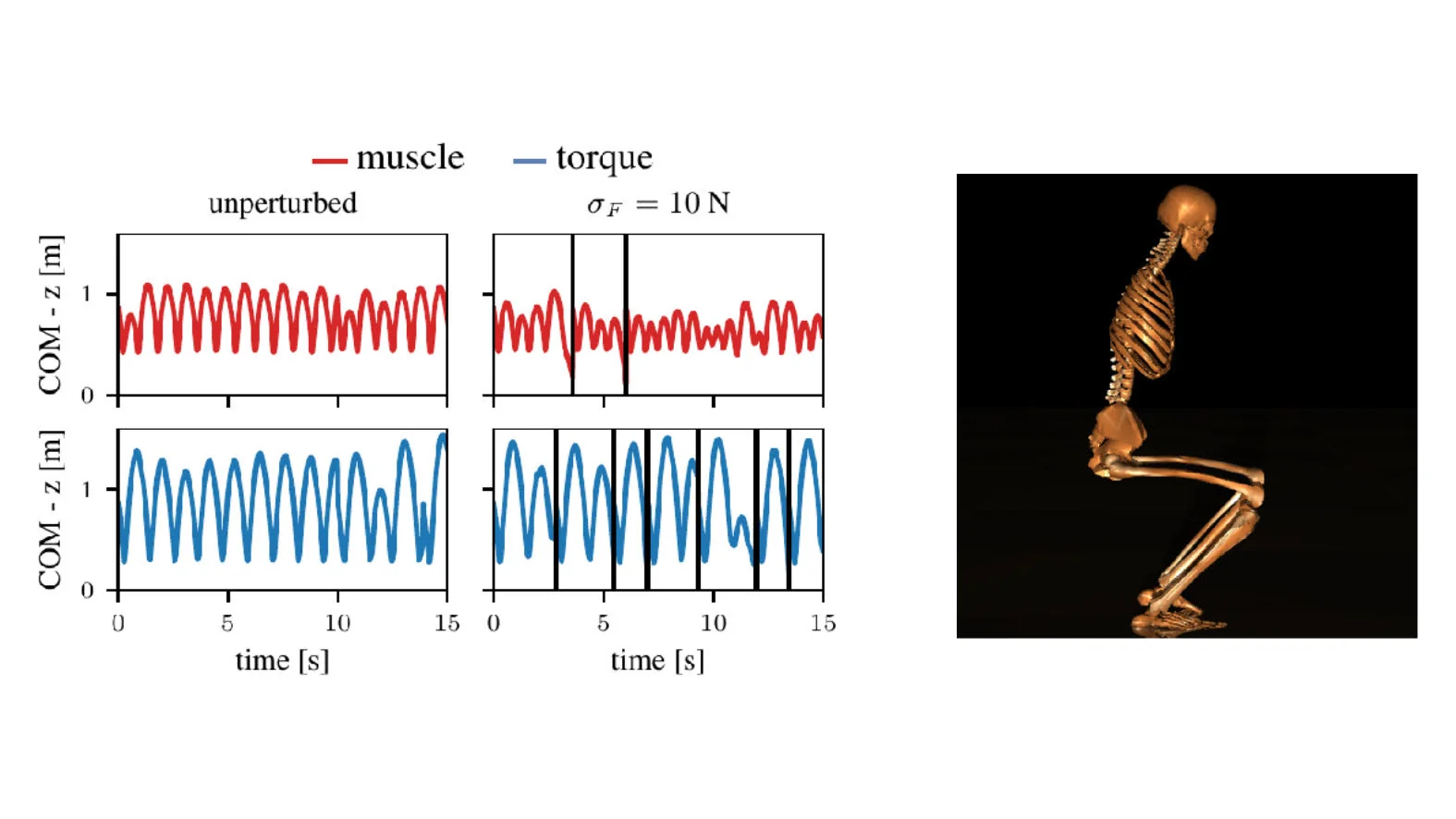
Humans have robust and versatile motor capabilities, excelling at learning new tasks. We hypothesize that nonlinear muscle dynamics enhance stability and aid learning. While recent advancements in simulations and robotics have applied learning techniques to muscle-actuated systems, there hasn’t been a comprehensive analysis of muscles’ advantages for learning from scratch. Our study fills this gap, demonstrating how muscle actuators can effectively improve data efficiency, hyperparameter sensitivity, and robustness.
Biological systems rely on muscles for actuation. Do muscles offer advantages over electric motors when viewed through the lens of learning and closed-loop control of behavior? We explored this question and found that muscles can enhance learning speed and robustness. This research highlighted the significant potential of leveraging muscle actuator morphology for natural and robust motion, so far only validated in simulation.
Publications