Natural and Robust Walking from Generic Rewards
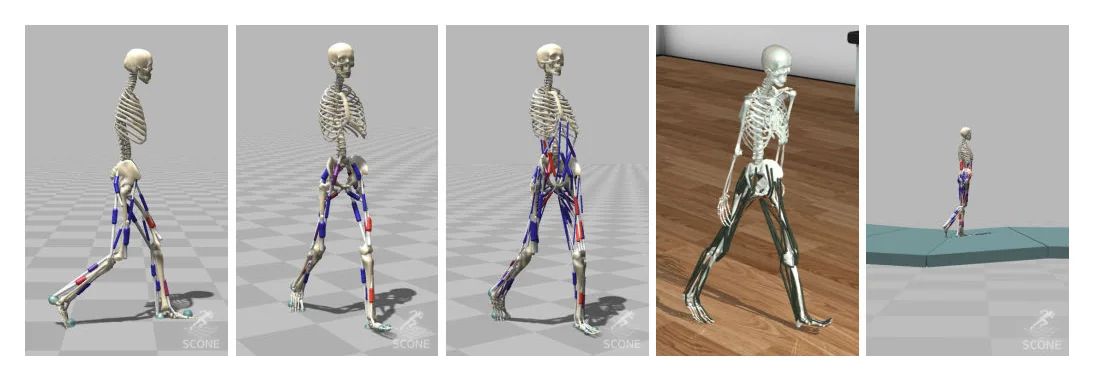
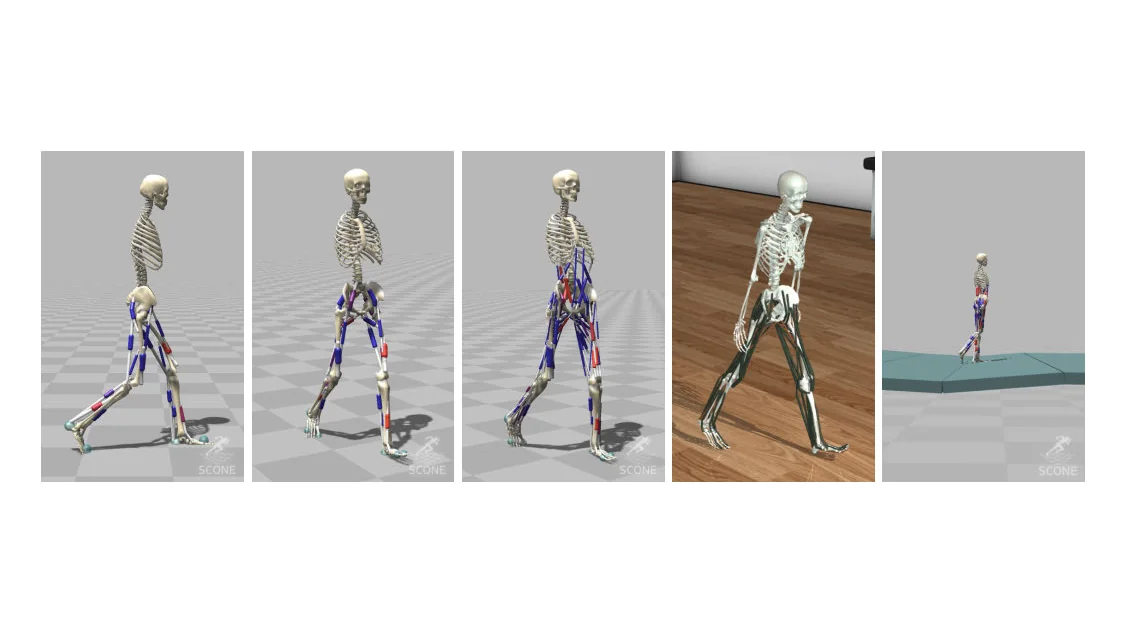
We are interested in how the human nervous system manages musculoskeletal redundancy to solve multi-objective control problems, such as stability, robustness, and energy efficiency, in bipedal walking. Our work suggests that using reinforcement learning to achieve human-like locomotion in bipedal models without relying on expert data could offer new insights into studying natural human walking in complex environments.
We can now achieve human-like walking in several high-dimensional muscle-driven models using only generic reward terms. This paves the way for the analysis of muscle patterns in patients with deficits and for the joint optimization of assistive devices such as exoskeletons.